You Can Just Do Stuff
A canvas that breathes, a bookstore detour, and the state of AI policy in San Diego.
There is a short video on the internet that I saw a few years ago, and it recently popped back into my head.
I keep thinking about it because it feels representative of this moment we are in, and the moment I am in.
A few years ago, I experimented with using ChatGPT to write code. I had an idea for a data visualization website for school psychologists, based on the Excel graphs I sell online. ChatGPT walked me through setting up the website and building the pages that would feed into the graphs. But as the site grew more complex, I learned that writing code was only part of building a good product. I also had to think through user experience, visual design, privacy, and the order in which everything should be built. I did not yet know enough to get the site to my vision, and the project stalled.
Some time later, I got to talking with a fellow soccer dad and now friend about AI-assisted coding. He taught me his workflow using the Claude extension in Visual Studio, and I was thrilled by how much easier it was to build. Instead of prompting the LLM for code and then copying and pasting it into the right place, Claude could write the code directly where it needed to go.
Freed from having to figure out which nuts fit which bolts, I could focus on bigger questions about how the site should look and work. I would describe my vision to Claude, and it would synthesize my ramblings into a thorough build-plan. Pretty soon, we were off and running.
Every time I thought of a new feature, we would talk it out and build something. I’d come back with this-not-that feedback, and we would build again. Six months later, PsychGraphs has finally reached the quality of user experience I originally envisioned and is now beginning to surpass it. Features that once felt pie-in-the-sky a few years ago are now built in minutes.
You can just do stuff.
This Labor Day weekend was another example. I had an idea for a piece of data visualization art that would capture the breath and pulse of our home, conveying how sometimes it feels alive, and other times it feels deeply asleep. I talked with Claude about what kind of data I might use. It suggested all kinds of measurements I could make, like noise, movement, weather, ground vibrations, you name it.
It was late Sunday night, and I did not have time to design, buy, and configure an instrumentation array. So, we narrowed it down to weather data I could access right then through APIs. I later added astronomical calculations. This was the result:
You can just do stuff.
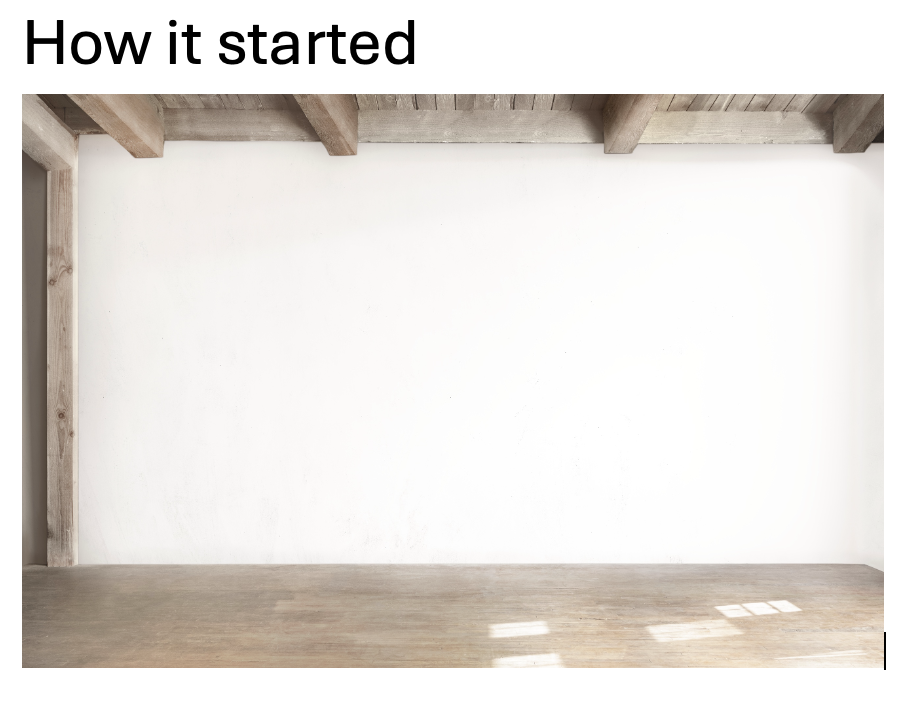
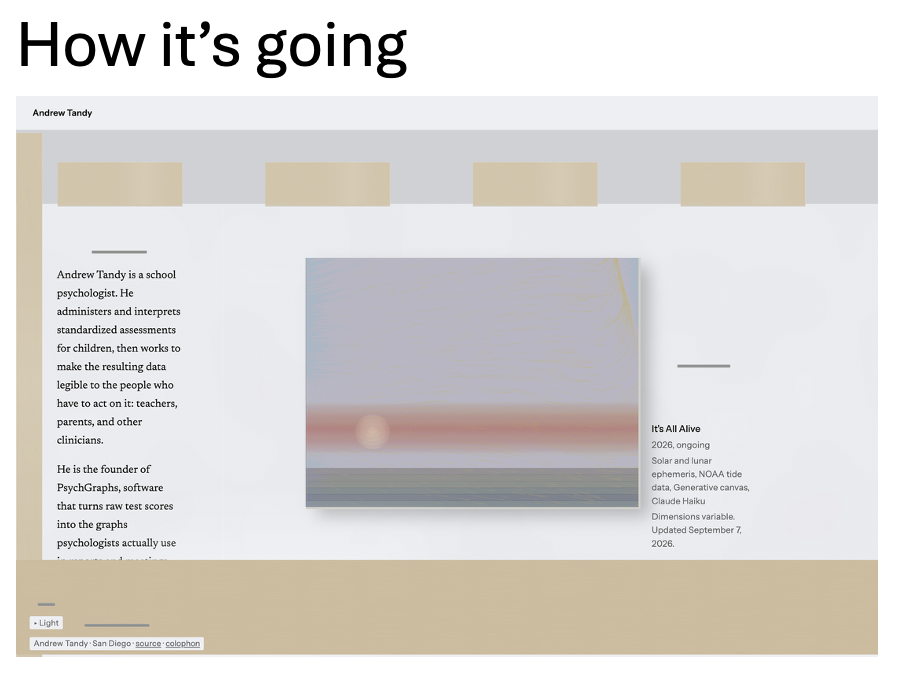
Then I thought, now that I have this cool little weird thing, I should make a whole web page to put it on, along with other future projects like it. I envisioned a minimalist modern art gallery composed of white plaster and hinoki wood. I started prompting. We started building.
I thought it would be cool if the gallery also used live data. It would be lit by sunlight during the day and moonlight at night, based on real astronomical calculations. Beams of light would move across the floor as the sun crossed the sky. When the sun was low, you would see golden specks of dust glimmering in the light.
Claude built a lighting engine. It took a while by Claude standards, about 90 minutes. I loved the precision and accuracy of the natural lighting, but it was not meeting my vision of a photorealistic gallery with my projects hanging on the walls. Instead, it looked like this:
Later that day, I took my son to the bookstore. We went off on our separate quests, he to the manga and me to the art books. I looked at covers and flipped through pages, searching for inspiration.
First, a color scheme caught my eye. Then I found a notebook-inspired design. Look familiar?
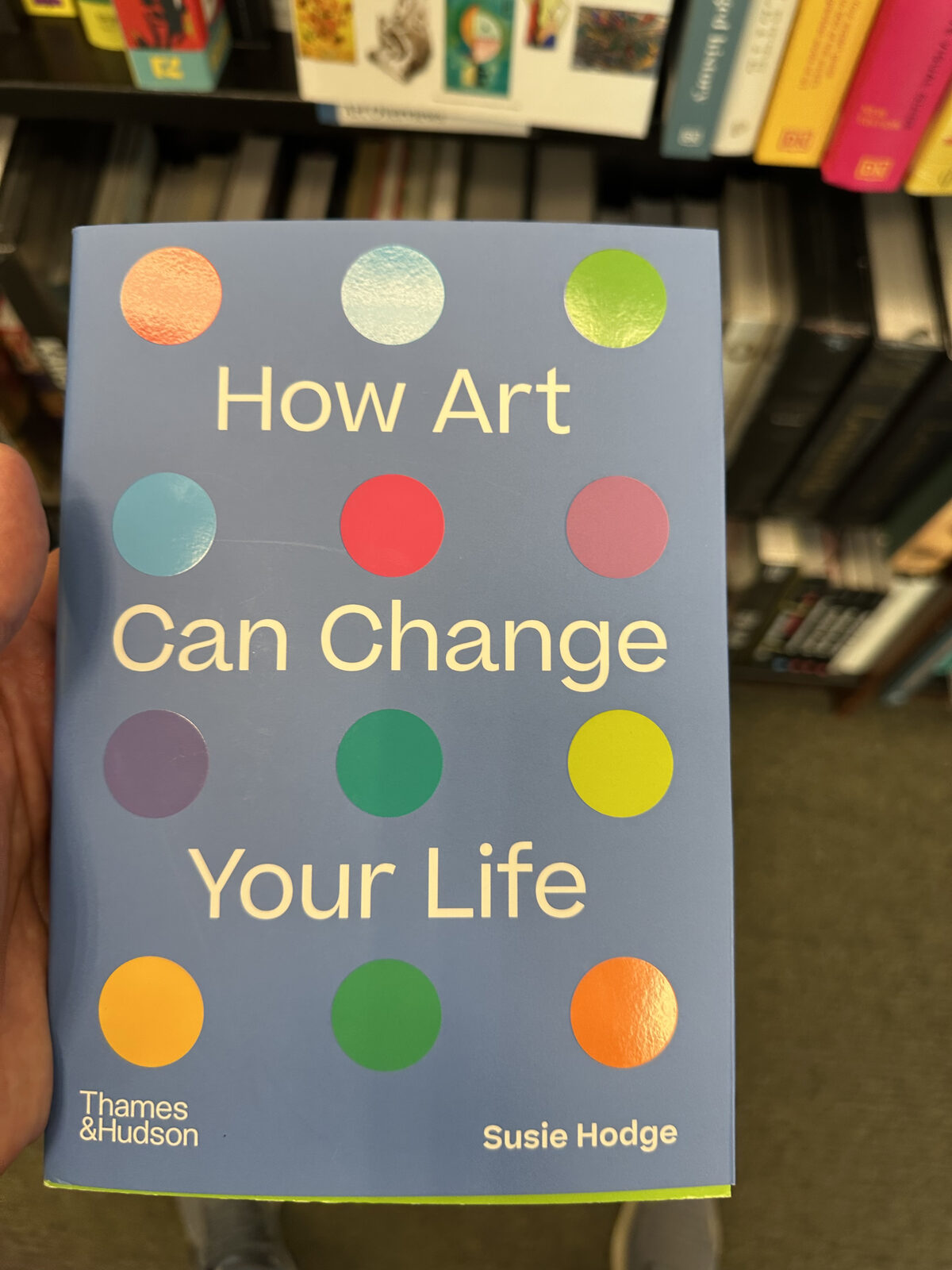
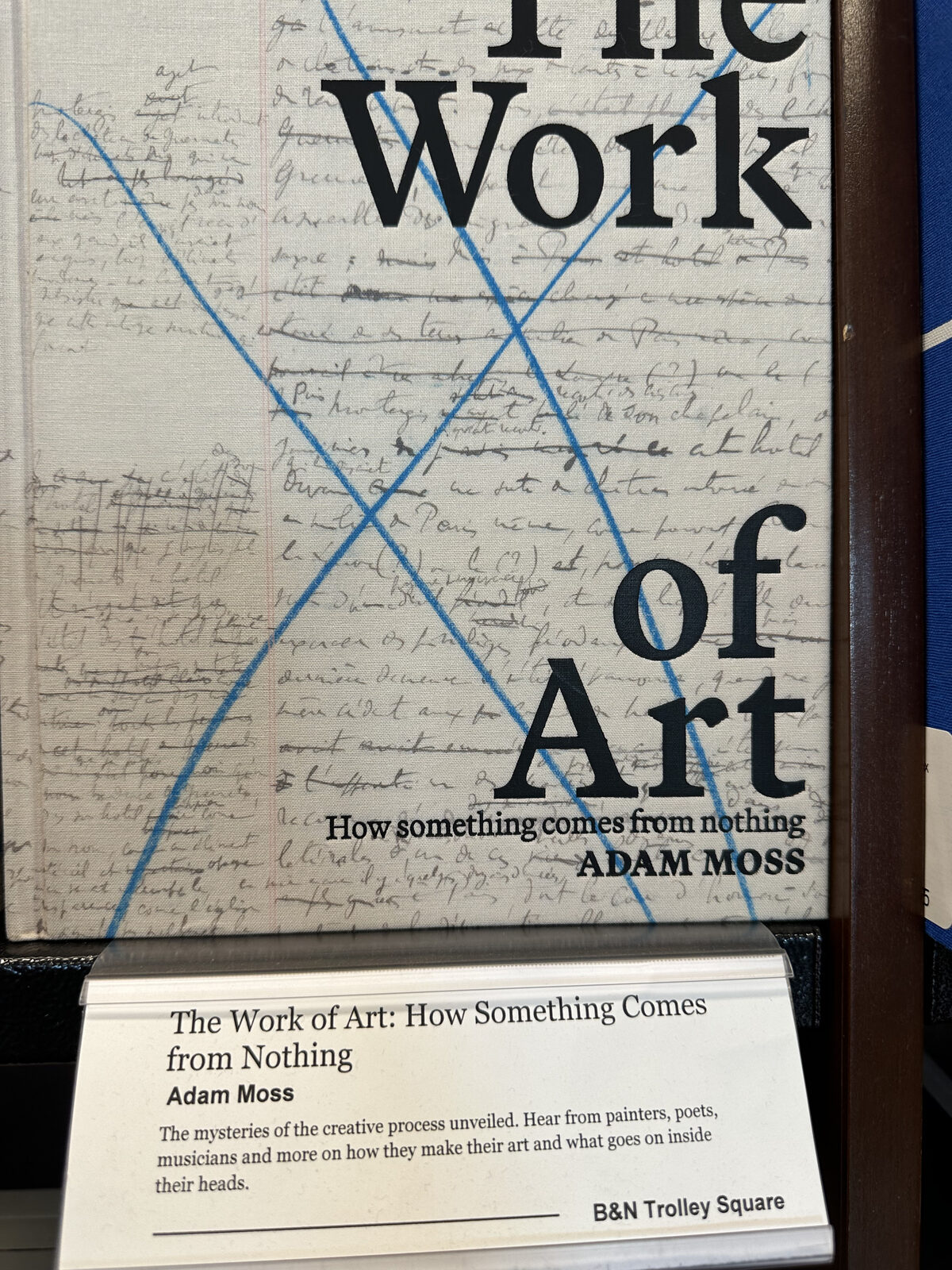
Right there at the store, I uploaded the photos into my design chat and began iterating. And here we are.
So, one trip to the bookstore, one new idea, and bam! I threw away my very own custom lighting engine based on San Diego’s solar and lunar positions. Had I been partnered with a human developer, that move would not have been good for morale. But Claude met my flittering whimsy with dutiful diligence. It gave me prototypes while I was still in the bookstore, and when I got home, we built it.
You can just do stuff.
A few days later, I had another idea. Each entry could contain images of the actual notes I made while writing it: the handwritten pages, the crossed-out lines, the thought before it was something completely different. I asked Claude if it was possible, and it answered with a build plan.
I am trying to illustrate the idea of learning in public. A notebook can be messy. It is the working out, the false starts, the idea that sounded brilliant in my head and faded in daylight. So you get the lighting engine I threw away next to the design that replaced it, and the ideas that changed on the drive home from the bookstore.
You can do stuff, but there may be side effects.
I recently heard DHH, an influential programmer and entrepreneur, use the term “AI psychosis” in an interview with Lex Fridman. I highly recommend it if you have six hours to listen (I commute). DHH talked about how he has slowly handed over the reins to AI-assisted coding. As he used the term, AI psychosis is what happens when you realize you can do almost anything, and you do not want to stop for anything. I have found myself wanting to refine ideas and chase new ones at all hours of the day and night; my eyes are tired and my posture is suffering, and it is not humanly sustainable. This is one reason I want to begin experimenting with agentic engineering.
So, fair warning: as this notebook fills with entries, the notebook itself will evolve around them.
You can just do stuff.
AI in Ed Policy Dive
I also spent some time this week getting acquainted with the current state of AI policy in education, particularly in California and San Diego. California has gradually developed a framework for the use of AI in schools. That work began with SB 1288, followed by guidance from the California Department of Education and, most recently, a model AI policy for districts and county offices of education to adopt.
Closer to home, SDCOE is wayfaring toward its North Star of reducing poverty and increasing belonging through educational opportunity. They have created a draft AI policy, with strong momentum toward building the systems needed for implementation. I also looked at what other large education systems in California are doing. LACOE has developed a detailed implementation and change management framework, while SFUSD has released guidance for staff rather than adopting a formal policy.
My takeaway is that much of the foundational thinking has already been done. The next challenge is turning policies and principles into systems that people can actually use. SDCOE appears well positioned to do that work and help its school districts and charter schools implement AI thoughtfully.
How I Used AI in Ed This Week
I did not get to do much report writing this week, which is good in some ways and highly distressing in others. IYKYK. But I did get to spend time supporting some of our youngest learners.
One of our younger students was still learning which behaviors are expected at school and which are unexpected. Instead of searching through my files for a mini lesson, I prompted up some bespoke coloring sheets, and it was so much more effective than my wah-wah-wah, Charlie Brown-esque droning.
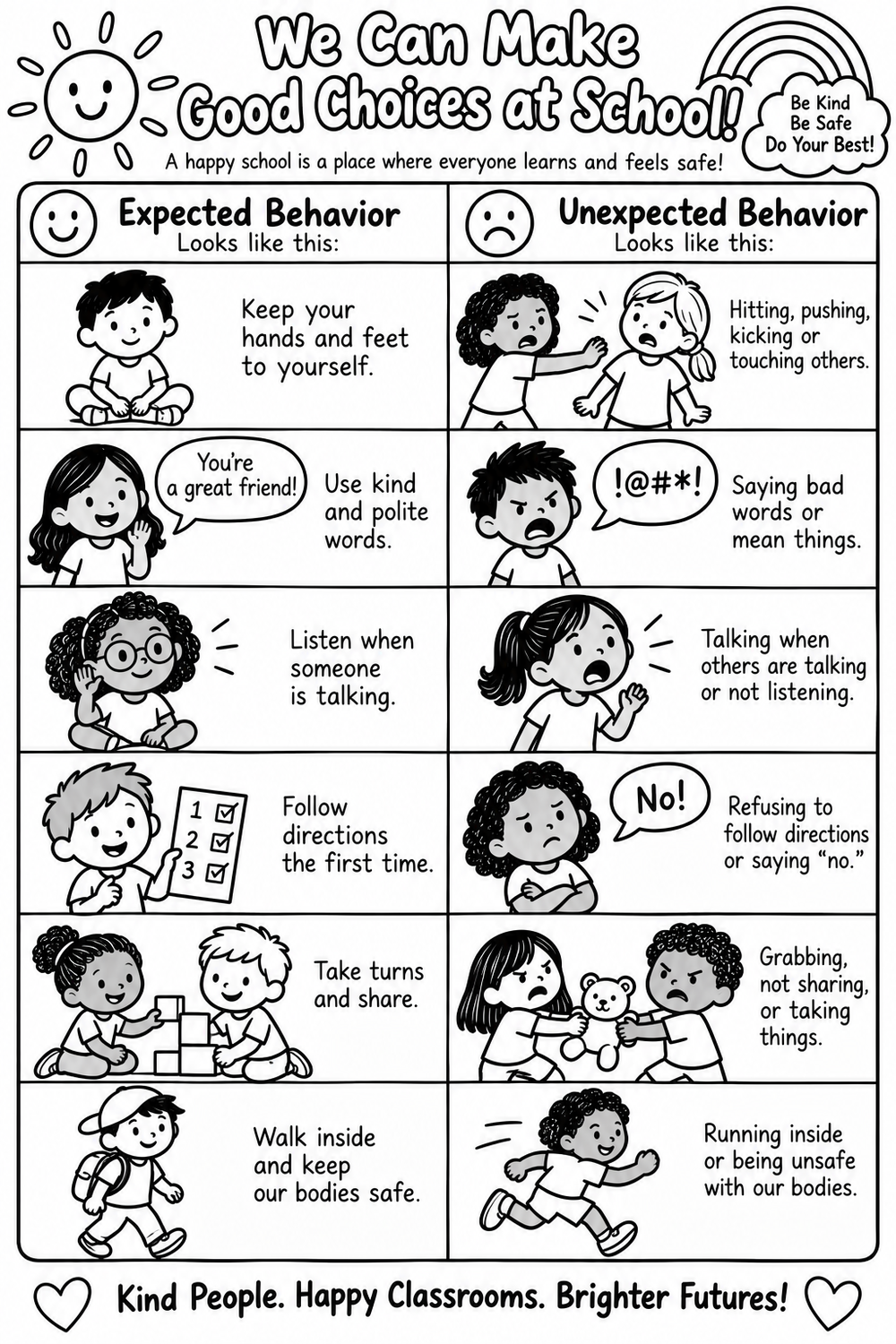
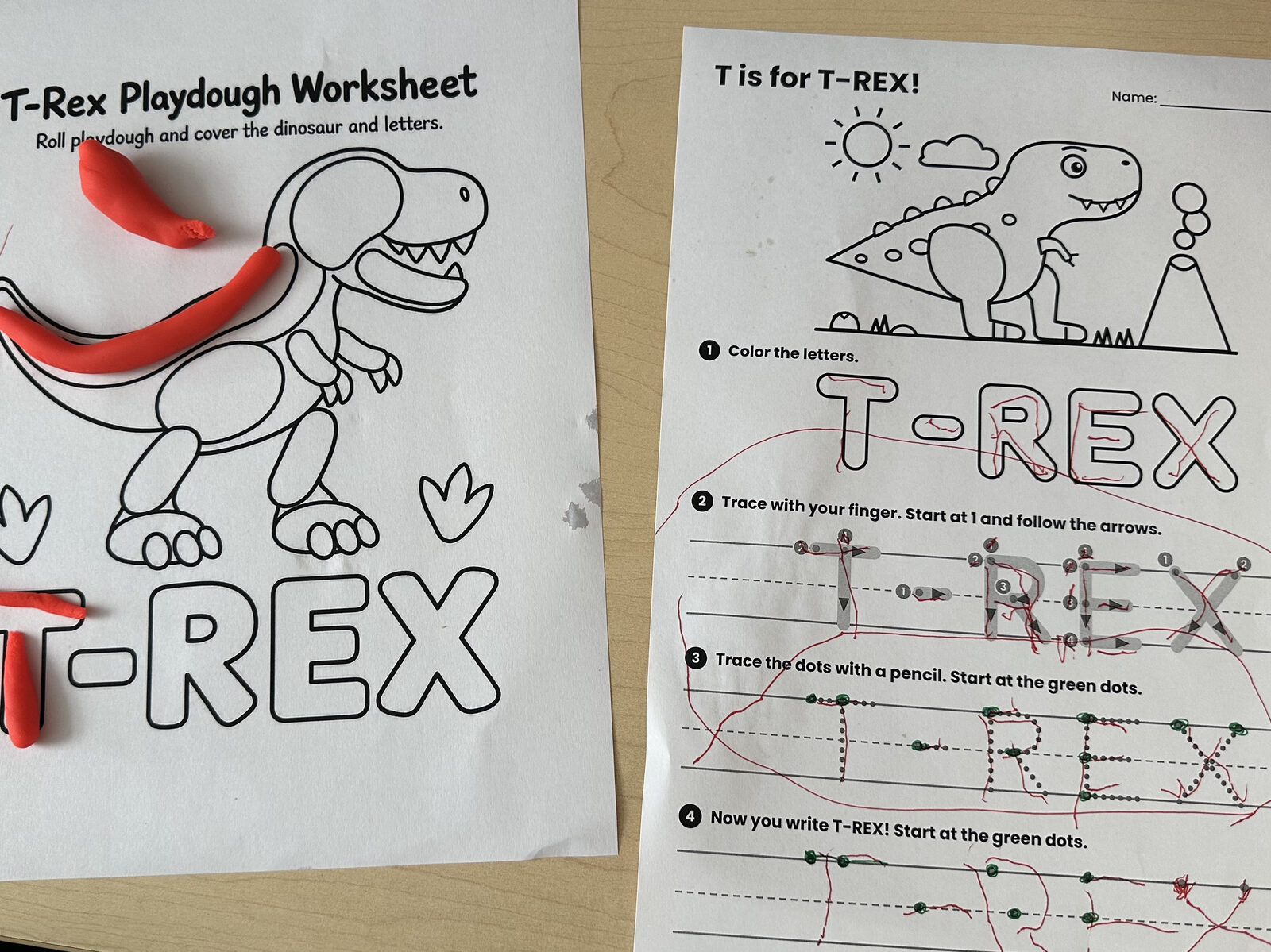
Later in the week, I did it again, this time uniting the wonderful world of dinosaurs with early literacy skills tailored to the student’s interests and needs.
I also finally tried Copilot. I tasked it with helping me get to inbox zero. After some back and forth, it found eight emails I could delete. I was hoping for about 2,000 more. I am still at inbox three zeroes, but it was a good example of guardrails in action and what it means to keep a human in the loop. Copilot did not make any changes on its own, and it made sure I was well informed before I deleted anything. Gasp!
And finally, though it has nothing to do with education, I created a logo for my fantasy football league, the League of Emotional Friends.

On Writing
I have been thinking a lot about writing this week. Two things, in particular, got me started.
First, I read an excellent piece by a fellow wrestling dad and now friend over at wundervault.com. His newsletter is a great way to learn and keep up with the latest developments in AI. In this issue, he explores what AI-assisted writing means for education and publishing. He also explains his own process for teaching AI to write in his voice.
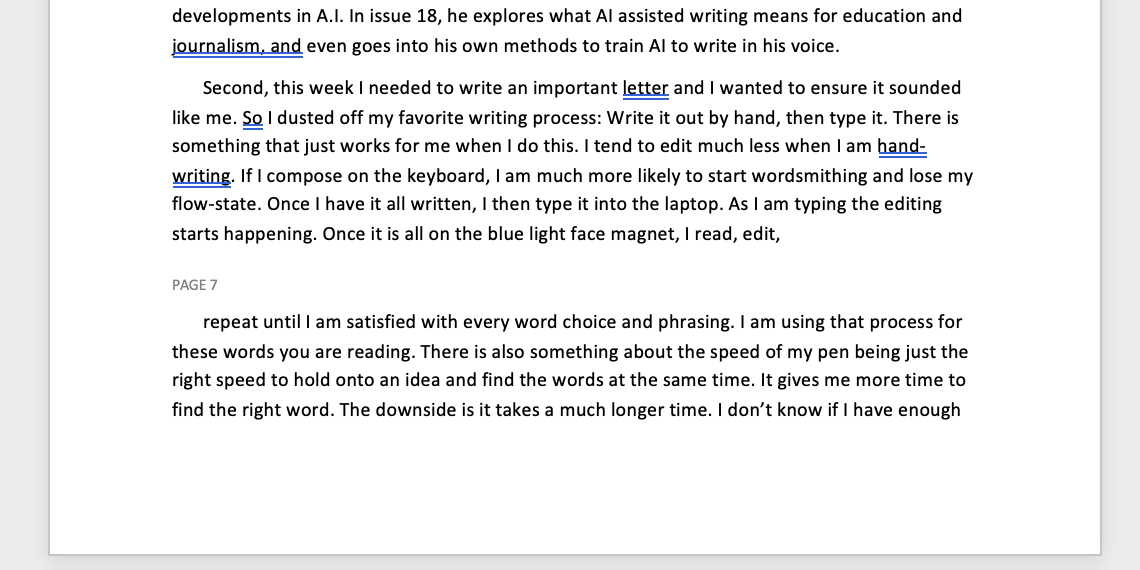
Second, I needed to write an important letter this week, and I wanted to make sure it sounded like me. So I dusted off my favorite writing process: write it out by hand, then type it.
There is something that just works for me when I do this. I edit much less while writing by hand. If I compose on a keyboard, I am more likely to start wordsmithing and lose my flow. Once I have written everything by hand, I type it into the laptop, and the editing begins. I read, edit, and repeat until I am satisfied with every word choice and bit of phrasing.
The process of writing that letter reminded me how much I enjoy writing. It’s easy to forget when all you ever write are emails for work and psychoeducational reports. The experience made me want to get back to a personal writing practice and reminded me how energizing it is to write, not only to convey ideas, but to discover them.
I am using that process for the words you are reading now. The speed of my pen is just slow enough to give me time to find the words and fast enough to not lose the idea. The downside is that writing by hand takes longer, and I am already realizing I don’t have enough discretionary time to write like this and build everything I want to build. My process must evolve.
Halfway through typing this, my process did just that. I realized I could just take pictures of my writing and have AI transcribe it. Yet another example of how AI can take care of mundane tasks so humans can spend more time on what we want to do.
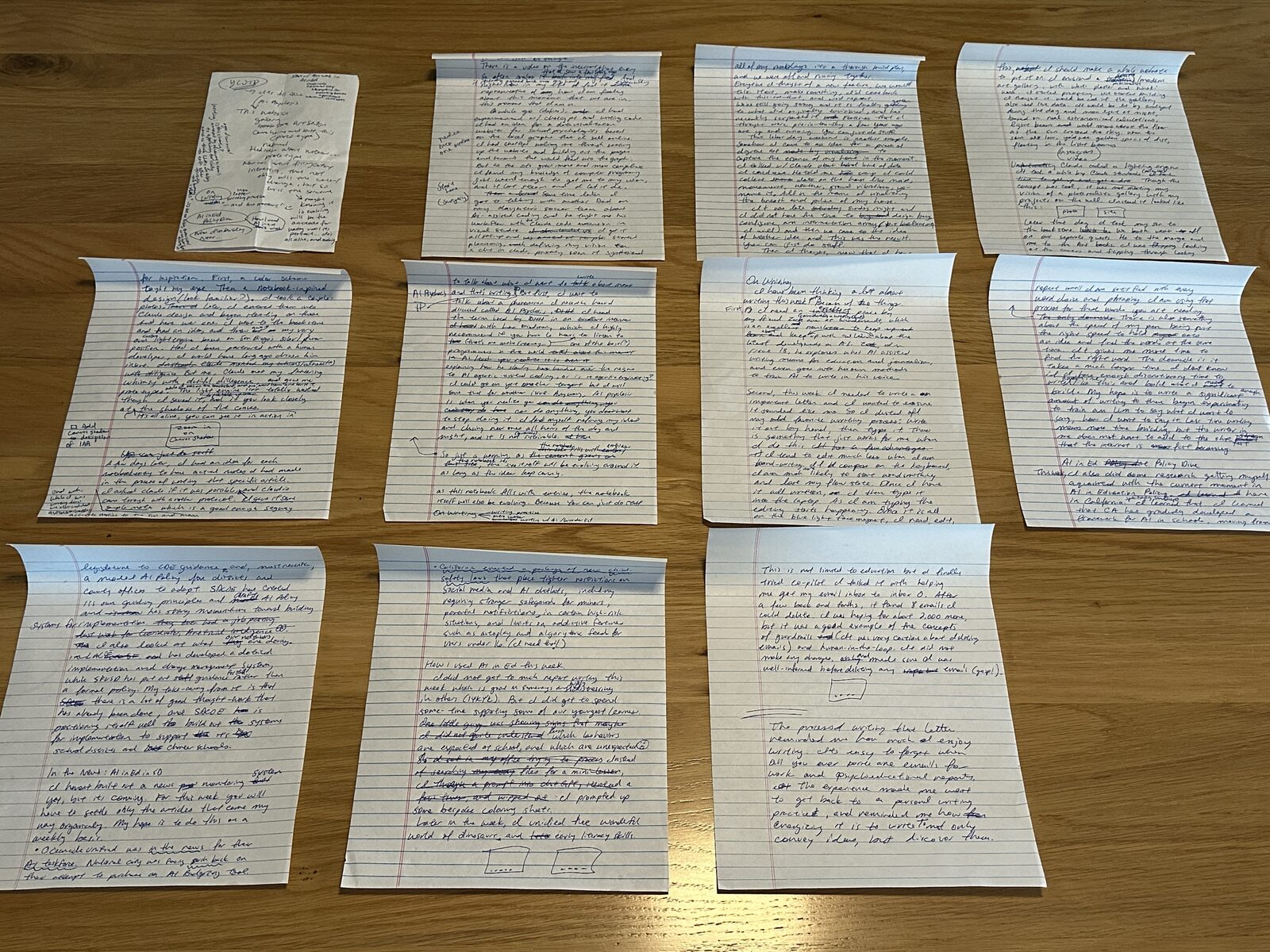
My hope is to write enough in my own voice that I can begin experimenting with training an LLM with examples of how I like to say things. AI can save me some typing, but the writer in me does not want to add to the slop-stream the internet is fast becoming — and honestly, that matters ;)
In the News: AI in California and San Diego
I have not built out my news-monitoring system yet, but it is coming. For this week, you will have to settle for the stories that found their way to me organically. My hope is to make this a weekly feature.
-
Oceanside Unified’s AI task force was in the news.
-
National City approved an AI budgeting tool after members’ (valid) questions were addressed. Something I want to explore in future issues: How can public agencies develop AI policy with the people it will affect? How do we build trust by including them in a transparent process while remaining open to what the technology might offer?
-
California enacted a package of child-safety laws that tightens restrictions on social media platforms and AI chatbots. The laws include stronger safeguards for minors, parental controls and notifications, and limits on addictive features for users under 16. Among the measures is Adam’s Law, named for a California teenager who died by suicide after interactions with a chatbot.
That’s it for Issue 1. I hope to do this weekly, at least. Stay intelligent, humans.
— Andrew